
Canada's $890M sovereign-compute bet: governed onshore, or just hosted here?
#energy#sovereign-compute#scip#canada
David Olsson
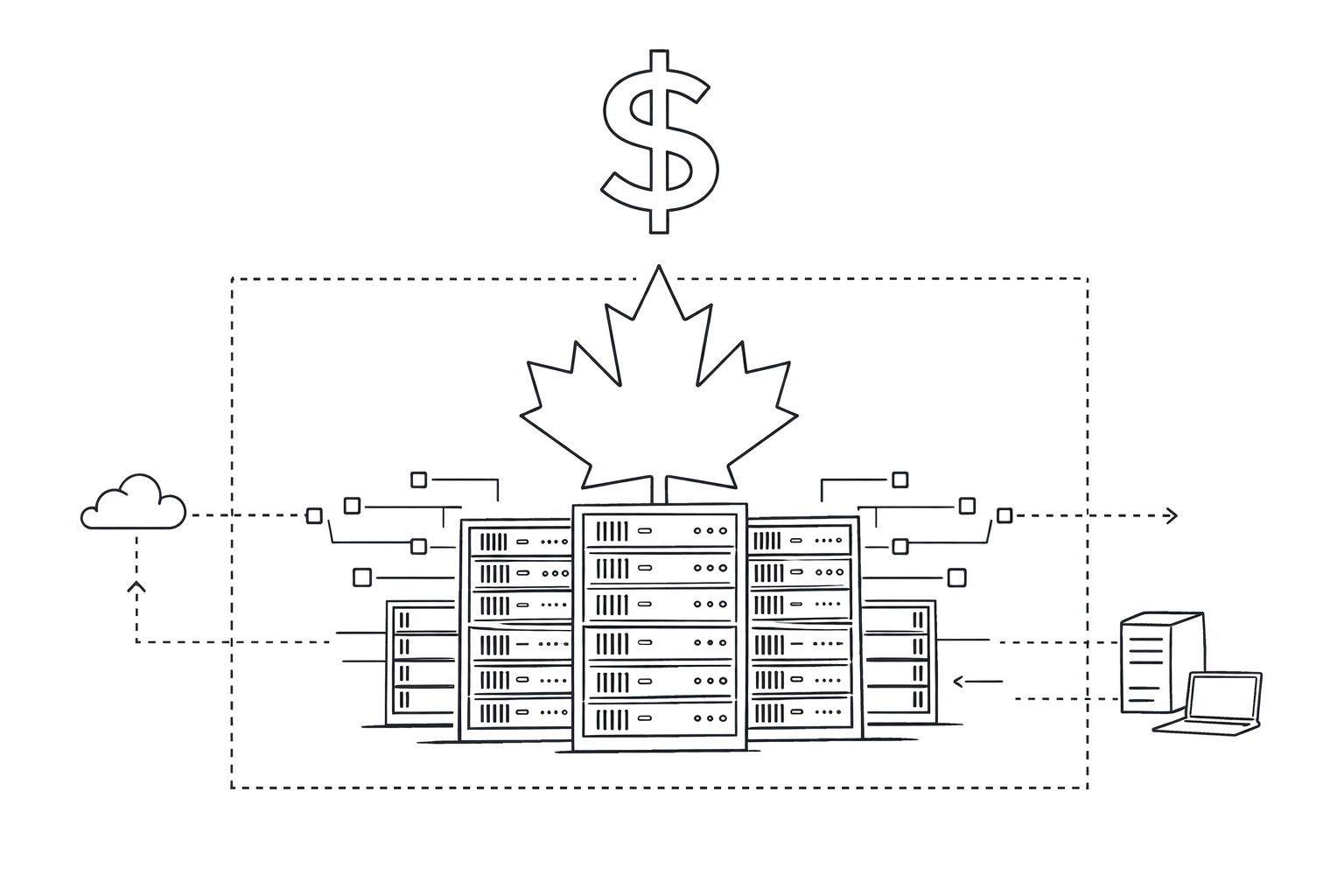
Canada has decided that compute is infrastructure, and is paying for it like infrastructure. The question left open is what "sovereign" buys.
The federal government launched its AI Sovereign Compute Infrastructure Program — roughly $890 million over seven years to build a Canadian-located, Canadian-governed public AI supercomputer, with an application window already running. Alongside it, the AI minister named 44 projects receiving federal money under the $300-million Compute Access Fund; the first $66 million covers up to two-thirds of Canadian cloud-compute costs for firms across life sciences, energy, and finance. Torys' analysis of SCIP highlights what the program text emphasizes: data residency and Canadian operational control. Blakes is already advising businesses on the same theme — data residency, vendor dependence, and the strategic case for domestically governed compute.
That is a coherent policy package, and a real one. Money is moving.
The desk's read. Sovereignty is an engineering fact, not a procurement adjective. It lives in three layers — where the data sits, where the compute sits, and who holds the decision rights — and a program can win one layer while losing the other two. A supercomputer on Canadian soil still runs on foreign silicon, almost certainly trains and serves foreign-origin models, and operates inside vendor relationships that come with someone else's terms. The Compute Access Fund subsidizes "Canadian cloud" without yet telling us who owns the facilities, the platforms, or the exit costs. None of this makes the bet wrong; it makes the definition load-bearing. The claim is "Canadian-governed." What has been demonstrated so far is "Canadian-located and Canadian-funded." The delta between those two phrases is where this program will succeed or quietly fail — and it will be visible in the boring documents: the operating agreements, the procurement terms, who can modify what without permission.
Watch the decision rights. The ribbon-cutting will not mention them.
Sources: ISED — SCIP launch · CBC — 44 compute projects · ISED — Compute Access Fund · Torys · Blakes
This piece argues from the desk's stated editorial position. Reported facts trace to the sources above; the analysis is ours.