
NCR to Root Cause to Fix: Closing the Non-Conformance Loop Digitally
#ncr#capa#inspection#compliance#aimqc#devlog#quality-control
David Olsson
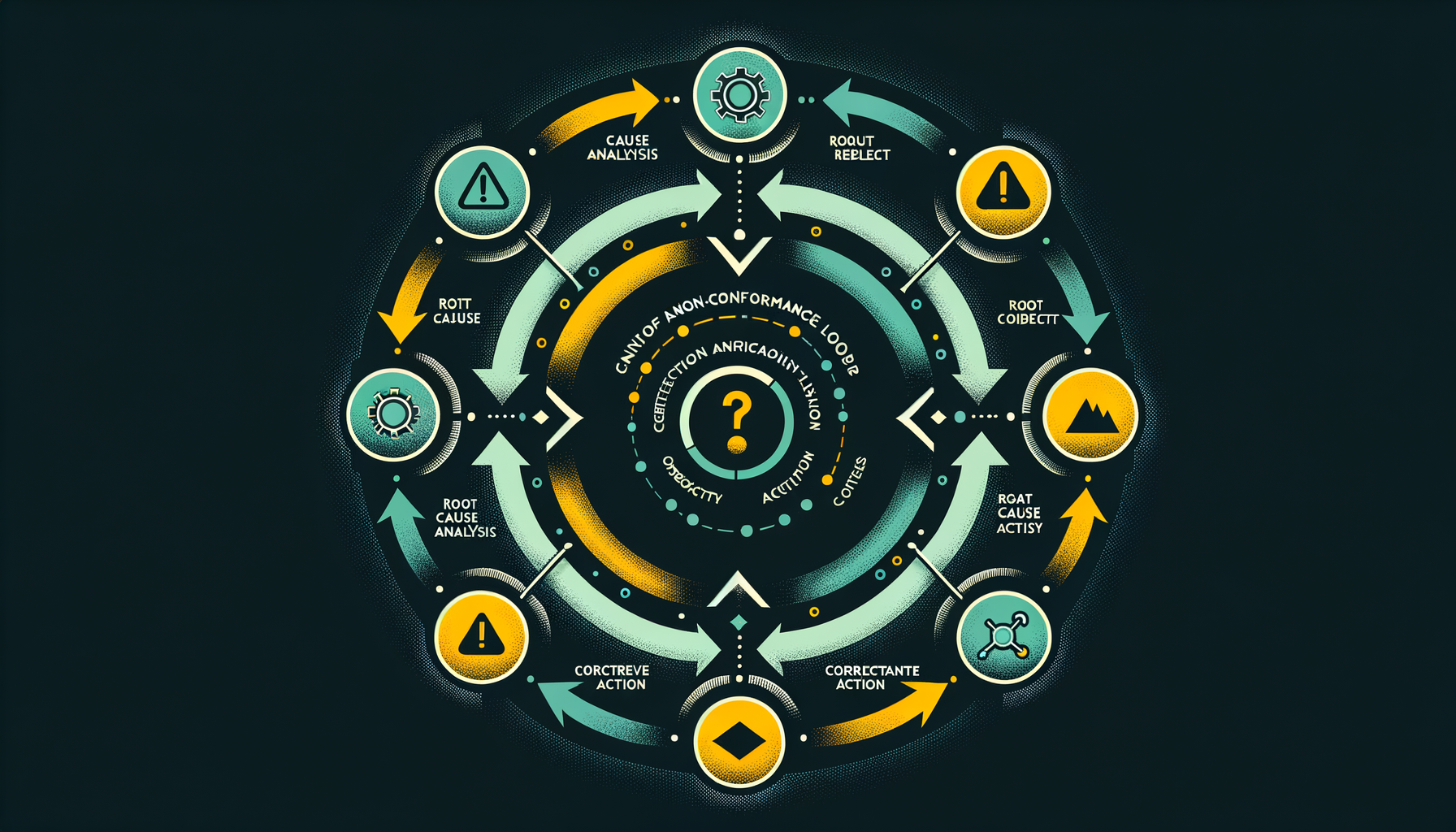
A non-conformance report is not a punishment. It is the start of a structured loop: find the problem, document it, understand why it happened, fix it, verify the fix worked, and confirm it will not happen again. On paper, that loop almost always leaks somewhere. The fix gets done; the paperwork does not catch up. Or the paperwork gets done but is never connected to the corrective action. The loop stays open. We built it closed.
What an NCR is
A Non-Conformance Report (NCR) documents a deviation from a specified requirement. The requirement might come from a drawing, a specification, a welding procedure, a regulatory code, or an ITP acceptance criterion. If the work does not meet the requirement, an NCR is raised.
NCRs are not optional on regulated Alberta construction projects. They are a required part of the quality record. An uninvestigated NCR — raised but never closed — is a red flag in a turnover audit.
How NCRs enter the system
In AIMQC, NCRs can enter two ways.
The first is automatic. When an inspector records a failed ITR (Inspection Test Record) and marks ncrRequired = true, the system generates an NCR automatically. The NCR is pre-populated with the activity, location, discipline, and the inspection context that triggered it. The inspector does not have to create it manually.
The second is manual. A QC manager or inspector can raise an NCR directly — for a field observation, a material issue, or a deviation found outside the formal inspection workflow.
The NCR record
NCRLog
  └── ncrNo (auto-sequenced per project)
  └── itrId (if auto-generated from inspection)
  └── dateRaised, raisedBy
  └── discipline, location, description
  └── codeReference (which code or spec was violated)
  └── rootCause
  └── disposition (accept-as-is | repair | reject | rework)
  └── dispositionJustification
  └── correctiveAction
  └── status: open → underReview → dispositioned → closed
  └── closedBy, closedDate
  └── attachments (photos, sketches, supporting docs)
The enhanced model adds severity classification, cost tracking, and formal containment actions. A minor dimensional deviation has a different workflow path than a structural weld failure.
Root cause and CAPA
Once a disposition is agreed, the NCR connects to a CAPA (Corrective and Preventive Action) record. This is where the loop closes.
Corrective action addresses the specific instance: repair the weld, replace the material, redo the fit-up.
Preventive action addresses the underlying cause: update the procedure, re-train the crew, change the inspection gate, add a witness point to the ITP.
CorrectivePreventiveAction
  └── type: corrective | preventive
  └── ncrId (the NCR it responds to)
  └── rootCauseId
  └── proposedAction
  └── implementationPlan
  └── responsiblePerson, targetDate
  └── verificationMethod
  └── verifiedBy, verifiedDate
  └── effectiveness: effective | partiallyEffective | notEffective
  └── closedBy, closedDate
The effectiveness field is important. A corrective action that closed an NCR but did not eliminate the root cause will show up in the data when the same type of NCR recurs. That pattern is visible in reporting. Over time, it shows which corrective actions are working and which are not.
Hold point connection
An NCR can trigger a hold. If a critical non-conformance is raised against work that is in progress, the relevant ITP hold point can be activated — blocking downstream work until the NCR is dispositioned and the corrective action is verified. The connection between the NCR and the hold point is explicit in the data model, not a manual coordination task.
Why the closed loop matters
The value of a closed NCR system is not compliance theater. It is learning. A construction organization that tracks root causes and CAPA effectiveness over time across projects accumulates real data about where and why quality problems occur. That data can drive changes to ITP design, crew training, and procurement standards.
Most organizations have that data in principle — it is buried in closed NCR binders on a shelf. When it is structured and searchable, it is usable.
David Olsson is CTO at AIMQC. Contact: dolsson@aimqc.com